26.10.2026
The bidding seminar at the Helsinki Olympic Stadium provided a great deal of insight and input for the next steps
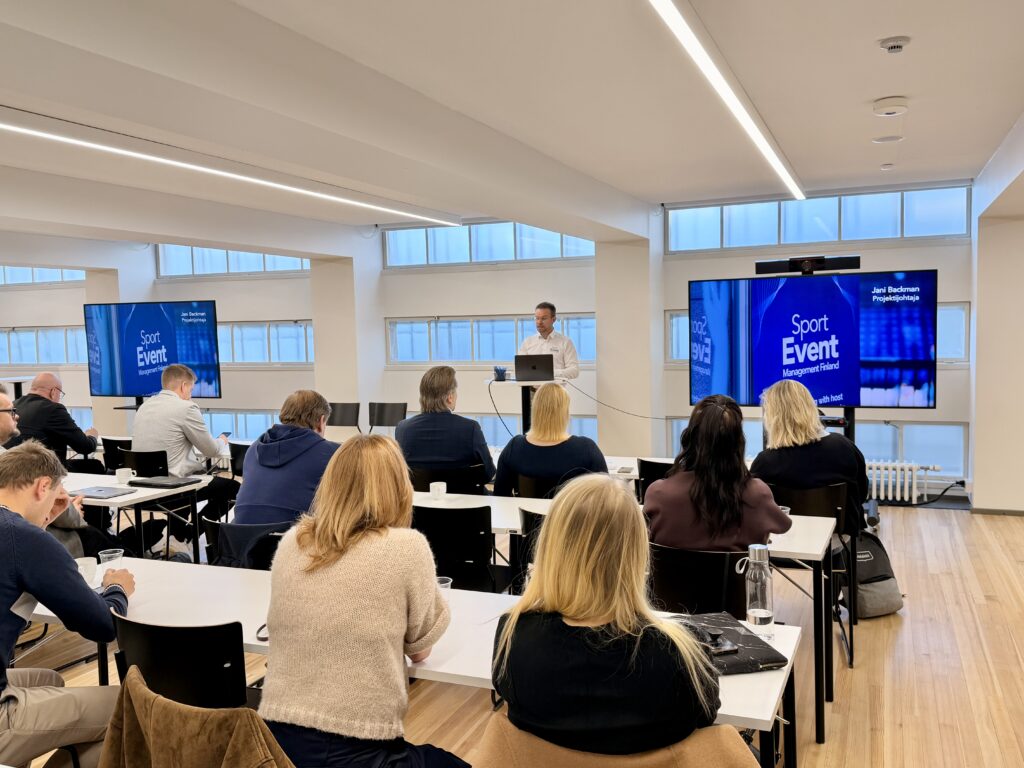
Around 50 representatives of national sports federations, host cities and stakeholders gathered at Helsinki Olympic Stadium on 22 October 2026 for a bidding seminar on putting Finland’s national bidding strategy for international sports events into practice. The seminar was organised by Tapahtumateollisuus ry and Sport Event Management Finland (SEMF) together with the City of Helsinki. On the same day, Helsinki was awarded the 2030 European Athletics Championships.
The national bidding strategy, published in April 2026 by Tapahtumateollisuus ry and SEMF together with stakeholders, sets a shared direction for Finland‘s bids to host international sports events. The seminar moved the discussion from strategy to implementation. The programme covered the perspectives of cities and federations, international influence and the upcoming reform of the Finnish gambling market.
Base pillars for implementation
After a welcome from Ari Kuokkanen, Director of Helsinki Olympic Stadium, Sami Kerman, CEO of Tapahtumateollisuus ry, set out the sector’s goals ahead of the next parliamentary elections. These include better recognition of the events sector in regulation and public services, and a national support function for bidding for events.
Jani Backman, Project Director of SEMF, and Ida Minkkinen, Senior Expert at Tapahtumateollisuus ry, presented the roles of the two organisations in the field. Backman outlined the five pillars – also mentioned in the strategy framework itself – on which implementation of the strategy rests:
- a clear national division of roles between the state, cities and federations, and long-term commitment
- a permanent national support structure to coordinate bids, build expertise and support international influence
- a predictable funding and risk-sharing model and stronger public–private partnerships
- legislation and incentives that recognise sports events as investments and business activity
- a shared impact measurement model and strategic targeting of resources
A workshop followed, in which participants discussed how their current bids had progressed this year and what practical support they would want from a national support structure.
Cities bid for vitality and growth
Sanna Forsström, Head of Brand and Events at the City of Helsinki, presented the city’s bidding model, which runs from identifying an opportunity and a go/no-go assessment to building a bid team, committing stakeholders and planning legacy and impact. Helsinki chooses events according to whether they support the city’s growth targets, whether the city has a credible competitive edge, and whether responsibilities, risks and funding are clear.
The European Athletics Championships 2030 bid served as an example of the approach. The seven-day championships, with an estimated 1,500 athletes, are expected to generate around €64 million in economic impact for Helsinki.
Forsström advised federations to sell impact rather than the competition, approach the city in good time, build long-term partnerships, and collect impact data systematically. In her presentation, Helsinki does not bid for major events for their own sake. It bids to strengthen vitality, growth, visibility and international competitiveness.
Markku Pyykkönen, Marketing Director of the City of Joensuu, explained why Joensuu bids for sports events. In the city’s visitor survey, events were the second most common main reason for visiting Joensuu (19%), after visiting friends and relatives (21%). Events are the leading motive in summer. The city has invested around €115 million in sports facilities in the Mehtimäki area.
Federations share their routes to success
Henri Pelkonen, Executive Director of the Finnish Table Tennis Association, described how the federation secured the 2028 European Junior Table Tennis Championships for Jyväskylä. The process took less than a year, from the decision to bid in November 2025 to the award in summer 2026. The ten-day championships will bring around 550 athletes from 40–45 countries to Jyväskylä. Pelkonen credited the result to excellent venues in Jyväskylä, strong support from the city, the federation’s international contacts and reputation, and Finland’s strengths as a safe and reliable host.
Salla Mäkelä, CEO of Skating Finland Oy, presented the road to the ISU World Figure Skating Championships Tampere 2027. Skating Finland bids according to a five-year plan agreed with the International Skating Union.
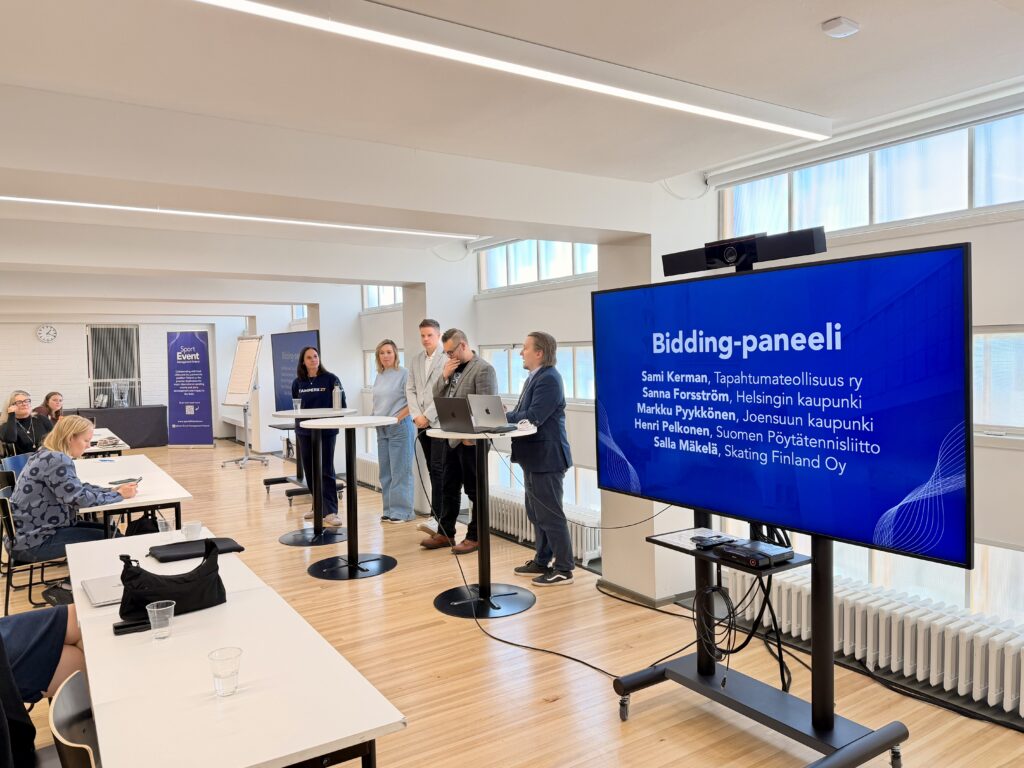
The morning’s speakers continued the discussion in a bidding panel moderated by Sami Kerman.
International influence is built over time
Niina Toroi, Head of International Affairs at the Finnish Olympic Committee, presented the committee’s international guidelines for 2032 and beyond. She also discussed open questions for events hosted in Finland in the current geopolitical situation, which ministries, the Olympic Committee, cities and federations are discussing.
Nita Korhonen, Director of Relations at the International Motorcycling Federation (FIM), assessed Finland as a host nation. Safety, reliability, strong relationships and smooth logistics count in Finland’s favour. Location, a small market, limited media visibility and a declining volunteer base are its challenges. Finland hosts more than 100 FIM events.
Matilda Suhonen, Communications Manager of the Finnish Biathlon Association, shared lessons from Kontiolahti’s bid for the 2031 World Championships. She emphasised trust, continuity of influence between bidding cycles, and the added value a host can offer international federations.
Gambling reform opens new partnership opportunities
Juha Kvist, consultant at Betsson, discussed the reform of the Finnish gambling market. Betting and online casinos will open to competition under a licensing system on 1 July 2027. According to Kvist, a successful partnership with event organisers and federations rests on four foundations: the right audience and fit, clearly defined saleable rights, a distinctive idea and a well-justified price.
The seminar closed with an open networking session on the day’s subject.
__________
Background: The national bidding strategy for international sports events was developed in 2025–2026 through a series of joint workshops with cities, national sports federations and stakeholders. It was published in April 2026. Its aim is to establish a shared national framework for bidding for and hosting international sports events and major championships in Finland.
Photos: Sport Event Management Finland